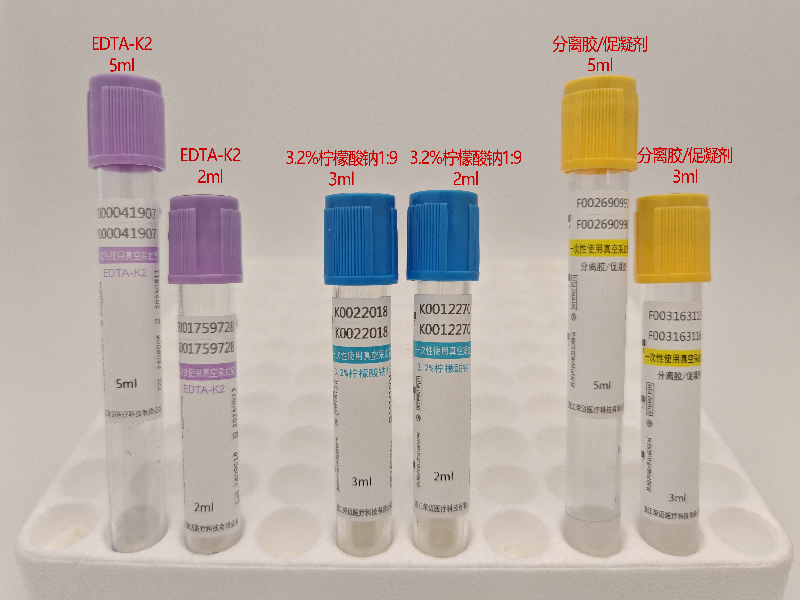
Blood collection tubes typically range in capacity from 2ml to 10ml, depending on test requirements and tube type. Common specifications include 2ml, 3ml, and 5ml. For instance, 2-3ml purple tubes are often used for complete blood counts, while biochemical tests may require 5ml yellow or red tubes. Capacity selection should be determined by the blood volume needed for testing, anticoagulant ratio, and instrument specifications.
I. Standard Blood Collection Tube Capacities
• Small-volume tubes: 2ml, 3ml. Suitable for pediatric patients, anemic individuals, or scenarios requiring fewer tests (e.g., complete blood count).
• Standard-volume tubes: 5ml, 7ml. Used for biochemical, immunological, and other tests requiring larger volumes of serum or plasma.
• Large-volume tubes: 10ml. Commonly used for blood culture tubes or specialized testing (e.g., genetic sequencing).
Tube Color-Coding
• Purple tubes (EDTA anticoagulant): Typically 2-3ml, used for hematology analysis.
• Red/Yellow tubes (additive-free/clotting agents): Mostly 5ml, used for serum biochemistry testing.
• Green tubes (heparin anticoagulant): 3-5ml capacity, used for emergency biochemistry or plasma separation.
• Gray tubes (fluoride anticoagulant): Typically 2 ml, used for blood glucose testing.
II. Volume Requirements for Specific Tests
• For example, coagulation tubes (blue) require strict adherence to the blood-to-anticoagulant ratio, typically filling to the standard mark (e.g., 2.7 ml).
• Blood culture bottles have larger capacities (8-10 ml) to ensure sufficient blood volume for microbial culture.
• Pre-added reagents (e.g., anticoagulants, clotting agents) must be mixed proportionally with blood. For instance, EDTA tubes require a 1:9 blood-to-reagent volume ratio; insufficient blood volume may cause clotting or inaccurate results.
• Infants, young children, or critically ill patients may use 1ml micro-tubes to minimize blood draw risks.
• Multiple small-volume tubes may be required for obese patients or those with poor venous access.
III. Usage Precautions
1. Blood volume must reach the tube's marked “valid range”; excessive or insufficient volume may affect test results.
2. Adhere to the “minimum blood volume principle” clinically, especially for children, elderly, or anemic patients. Prioritize small-volume tubes when collecting multiple samples.